There are quite a few aspiring writers on the Internet, myself being one of them. We come here to have a forum to practice the craft. The immediate feedback is such that it affords writers the opportunity to study their work and the work of others, in an effort to determine why a particular piece works or doesn’t work. One of the fundamental tenants of writing, in any form, is the need to be concise in presentation, yet clear in meaning. It is often one of the hardest objectives to achieve.
One of the best examples of a concise yet profound piece of American literature may be found in the remarks of one of our presidents at the dedication of a new national cemetery on 19 November, 1863. Following is an account of the event as it occurred that day and the impact this short, concise piece has had on readers ever sense.
- - - - - - -
Cemetery Hill, Gettysburg, Pennsylvania November 19, 1863
The weather was quite brisk on that late autumn day. The ground was still a bit muddy from the late fall rains. Fifteen thousand or so weary onlookers, soldiers and dignitaries were on hand, either by design or duty, to witness the ceremonies that day and to hear the famous orator from Boston address the crowd. Edward Everett, a man of many letters and accomplishments was to be the principal speaker that day. Everett; former congressman and senator, 4-term governor of Massachusetts as well as a former president of Harvard University, was considered to be the foremost orator of the day.
Around noon the ceremonies opened with the benediction followed by music from the Marine Corps band. After introductions, Everett rose to speak and did so in a fashion that belied his 70 years and gave those present what they had come to hear. Everett began with an unfaltering voice and was in his best form as he addressed the crowd for nearly two hours. When he had finished, the crowd was exuberant in their appreciation of the words he had spoken and applauded him hardily. The Baltimore Glee Club then sang a song that had been written for the occasion followed by the introduction of the President.
Ward Hill Lamon, personal friend and bodyguard to the President did the honors. “The President of the United States”, he announced.
The President, almost like an afterthought, had been invited by the organizers to “set apart these grounds to their sacred use by a few appropriate remarks.” Lincoln stood, tall and gaunt, walked to the podium and put on his spectacles. Taking a single sheet of paper from his pocket, his high pitched voice strong and clear, laced in his frontier accent, he began:
“Four score and seven years ago, our fathers brought forth upon this continent a new nation: conceived in liberty, and dedicated to the proposition that all men are created equal.
Now we are engaged in a great civil war . . . testing whether that nation, or any nation so conceived and so dedicated . . . can long endure. We are met on a great battlefield of that war.
We have come to dedicate a portion of that field as a final resting place for those who here gave their lives that this nation might live. It is altogether fitting and proper that we should do this.
But, in a larger sense, we cannot dedicate . . . we cannot consecrate . . . we cannot hallow this ground. The brave men, living and dead, who struggled here have consecrated it, far above our poor power to add or detract. The world will little note, nor long remember, what we say here, but it can never forget what they did here.
It is for us the living, rather, to be dedicated here to the unfinished work which they who fought here have thus far so nobly advanced. It is rather for us to be here dedicated to the great task remaining before us . . . that from these honored dead we take increased devotion to that cause for which they gave the last full measure of devotion . . . that we here highly resolve that these dead shall not have died in vain . . . that this nation, under God, shall have a new birth of freedom . . . and that government of the people . . . by the people . . . for the people . . . shall not perish from this earth.”
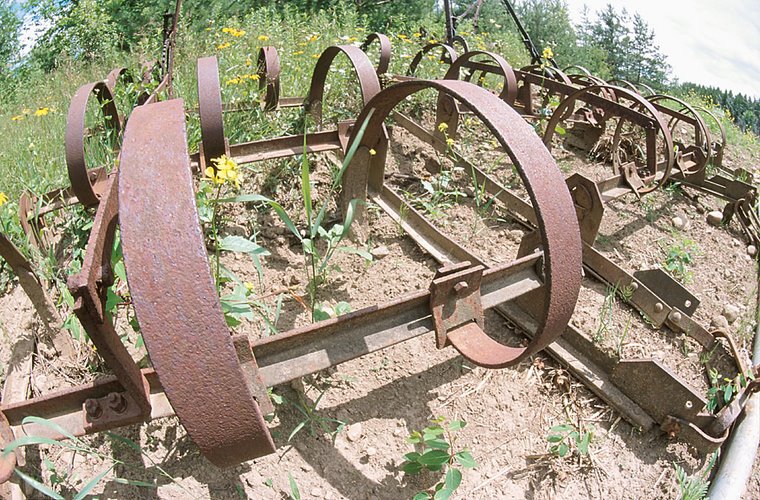
He spoke for barely two minutes, 269 words in ten sentences. He was through before the crowd had realized that he had begun. A photographer, who was taking his time to focus his camera, didn’t even get the shutter open before Lincoln was back in his chair. The bewildered collection of onlookers gave him only a sprinkling of applause and Lincoln, taking his seat again, turned to his friend Ward Lamon and told him, ” that speech won’t scour”, in reference to a worn out plow that will not turn the mud off in the field. Lincoln felt that his speech had failed.
In reality though, it was recognized almost immediately as a literary masterpiece. Edward Everett wrote to Lincoln the next day, praising him for his eloquent words, “I should be glad if I could flatter myself that I came as near the central idea of the occasion in two hours as you did in two minutes.”
This simple prose-poem by Lincoln, words of healing for all people for all times, is so elegant and graceful that the grandeur of its message is obscured.
Authors note: some 150,000 people were involved in the Battle of Gettysburg, with over 28,000 casualties. It was fought in the most ordinary of places when the two forces, seeking the shoes stored there, clashed on the field of battle. It is the largest battle ever fought in the Western Hemisphere and considered by most to be the turning point of the Civil War. Over 7,000 Union troops are buried there.
Copyright © 2007 Mike Lawson